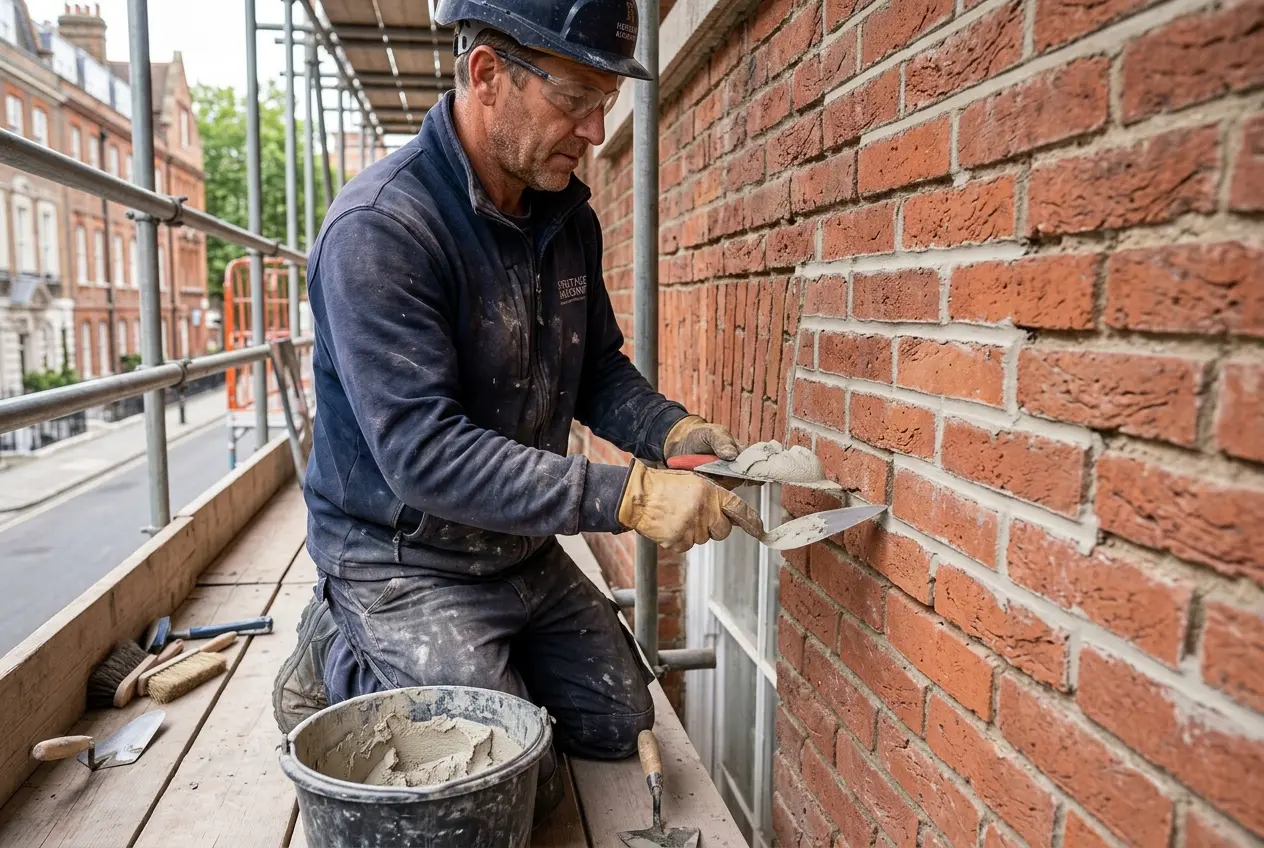
Philadelphia's freeze-thaw cycles wreak havoc on mortar joints, especially in pre-1940s rowhouses. We remove deteriorated mortar to a depth of ¾" using hand tools to prevent brick damage, then repoint with custom mixes that match the original composition and color.
For historic districts like Society Hill, we analyze existing mortar samples to replicate the lime-to-sand ratio used when your home was built. Modern cement-based mortars often cause more harm than good in older Philly brick—we use softer blends that allow necessary movement.
Projects include pressure washing (when appropriate), tuckpointing decorative joints, and applying breathable sealants to slow future erosion. Typical completion: 2-5 days for a standard rowhouse facade.
For historic districts like Society Hill, we analyze existing mortar samples to replicate the lime-to-sand ratio used when your home was built. Modern cement-based mortars often cause more harm than good in older Philly brick—we use softer blends that allow necessary movement.
Projects include pressure washing (when appropriate), tuckpointing decorative joints, and applying breathable sealants to slow future erosion. Typical completion: 2-5 days for a standard rowhouse facade.
Our Process
- 01 Step 1: Remove failing mortar with chisels and grinders (no abrasive blasting that damages brick)
- 02 Step 2: Test original mortar composition and mix custom replacement
- 03 Step 3: Pack joints tightly using hawk and trowel techniques
- 04 Step 4: Tool joints to match existing profile (concave, struck, or weathered)
Benefits
- Prevents water infiltration that leads to interior damage during Nor'easters
- Maintains historic authenticity for regulated neighborhoods
- Extends brick lifespan by 20-30 years with proper mortar flexibility
- Eliminates crumbling mortar debris on sidewalks
Frequently Asked Questions
How often should Philly rowhouses be repointed?
Every 30-50 years depending on mortar type and sun exposure. South-facing walls near the Delaware River often need attention sooner due to salt air and temperature swings.
Will repointing stop my basement leaks?
It helps, but we'll inspect your foundation simultaneously. Many Philly homes need complementary parging or drainage work—we'll tell you upfront if that's the case.